
Sound libraries · released
Recorded in rooms,
not generated.
1,616 sounds across four libraries. Every door, drawer, kettle and clock mechanism captured with a microphone in front of the real object, then named to the Universal Category System so it drops into your project already sorted.
Six of them, right here.
Five of them are from the free packs, which you can download in full without paying anything. The sixth, the letterbox, comes from Household Interior Foley Vol. 1. The file name under each one is the name it ships with. That is what UCS naming looks like in practice.

Both starter packs are free.
They are cut from the full libraries and carry the same naming and the same recordings. The entry point, not a teaser trailer.
This is what making a library looks like.
Four sessions, filmed while they ran. The box on the floor gets whatever the sound needs that day, the microphones come down to meet it, and the take is repeated until there is enough variation to cut from. Nothing starts until you press play.
Why a library and not a search result
The sounds most games use are the sounds every other game uses. A door creak that appears in a thousand titles stops carrying information. The player has heard it somewhere else and it no longer belongs to your world.
These libraries were recorded the slow way: one object at a time, many passes, every variation kept. A single cellar door produced dozens of usable files: handle, key, latch, slow close, slam. A game needs the whole gesture, not one representative sample.
Named so you can actually find them
Every file follows the Universal Category System, and every volume ships with its metadata as both CSV and PDF. That means the library sorts itself the moment it lands in your sound tool, and it is the same standard the UCS Tagger was built to apply.
Four libraries.
File counts are the contents of the delivered pack, category by category.
-
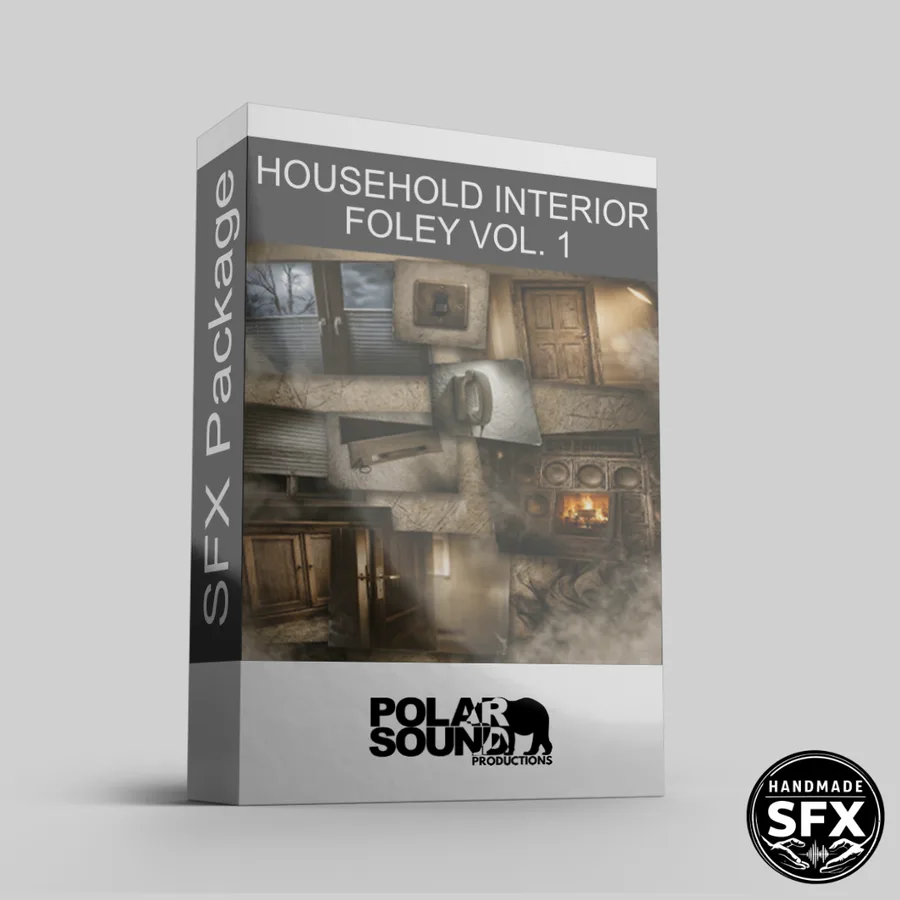
Household Interior Foley Vol. 1
The hardware of a flat: what opens, closes, clicks and latches.
- Doors
- Chimney
- Impacts & object movement
- Drawers
- Buttons & switches
- Intercom
- Cabinet
- Shutter roller
- Mailbox
-
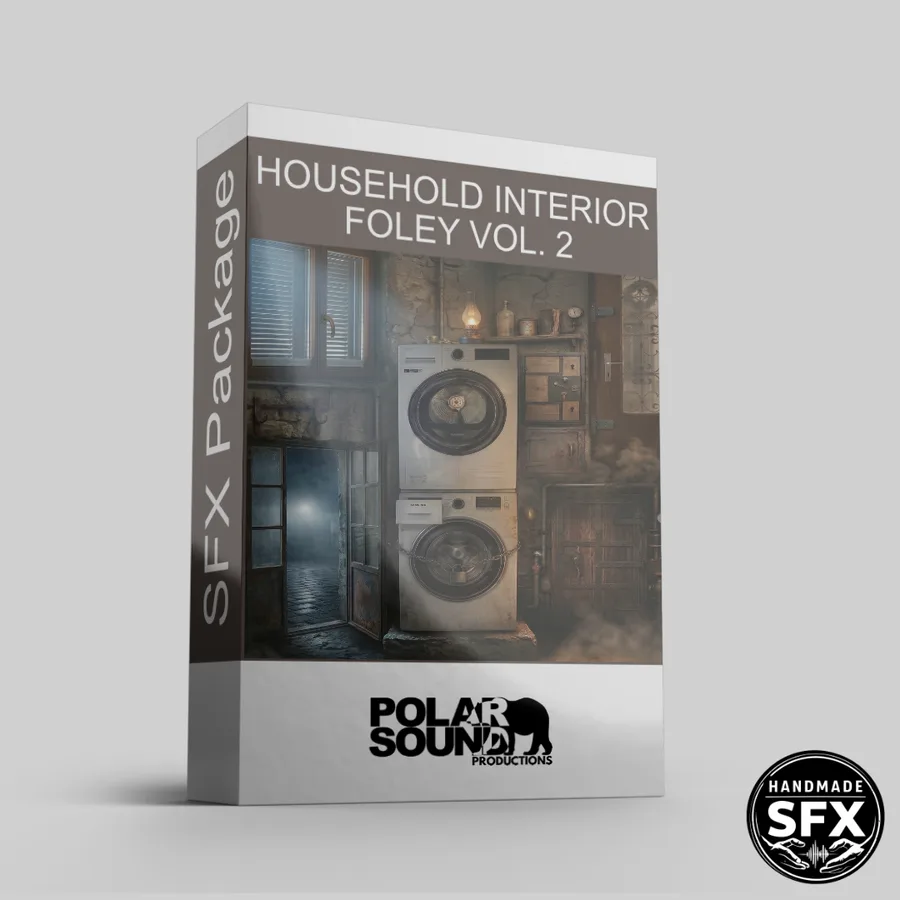
Household Interior Foley Vol. 2
Doors in depth, 417 of them, plus windows and a washing machine.
- Doors
- Washer
- Window
-
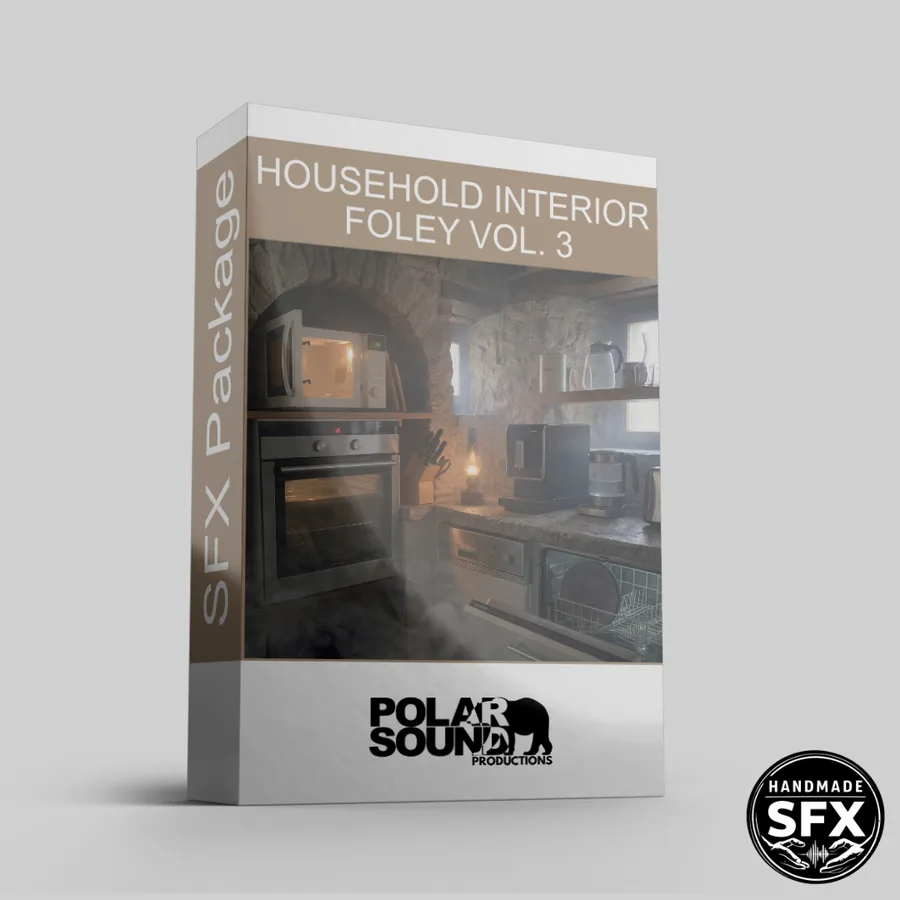
Household Interior Foley Vol. 3
The kitchen: appliances, utensils and everything that heats or cuts.
- Knife block
- Oven
- Dishwasher
- Kettle
- Coffee machine
- Shelves
- Microwave
- Toaster
- Glass door shelf
- Range hood
- Clock
-
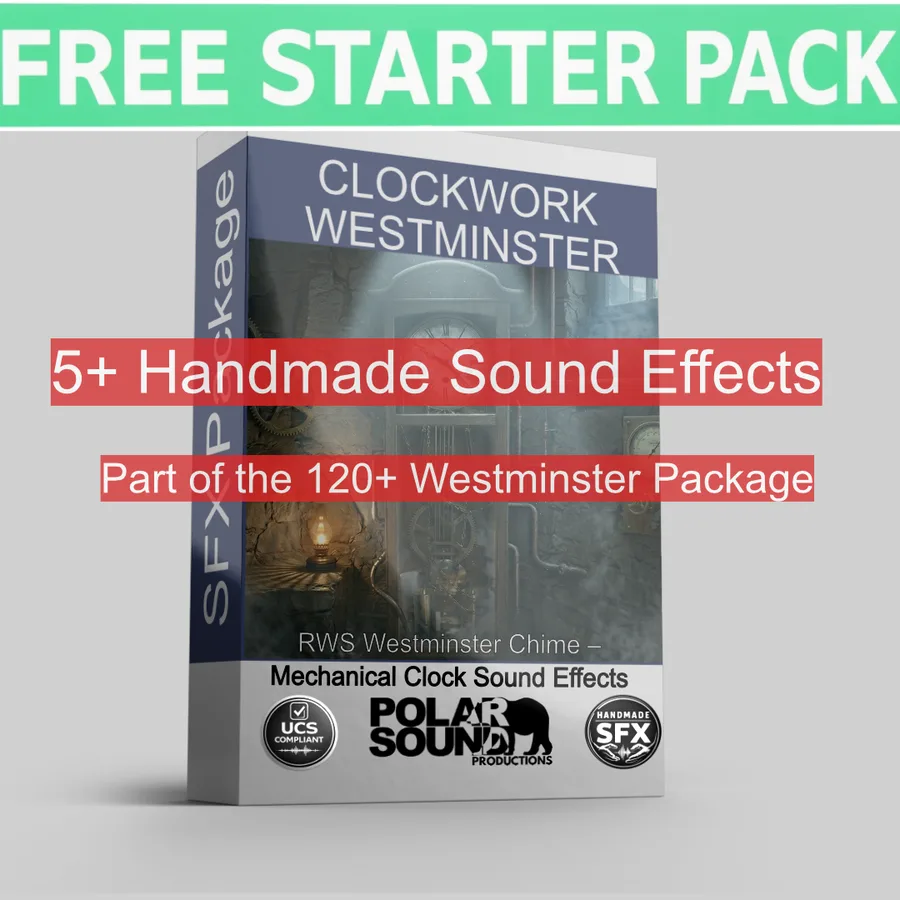
Clockwork: Westminster
One Westminster chime clock, taken apart by microphone.
- Strikes
- Windup
- Clock ticking
- Pointer movement
- Foley
Need something that isn't in a library yet?
Custom recording works the same way as these packs, only pointed at your game: your objects, your rooms, your variation count. Tell me what you need recorded.