
The studio
One person,
start to delivery.
I'm Simon Wagner, a composer and sound designer in Dornbirn, Vorarlberg. Polarsound is a one-person studio, which means the person you brief is the person who records, designs, mixes and delivers. Nothing gets lost being passed on, because nothing is passed on.
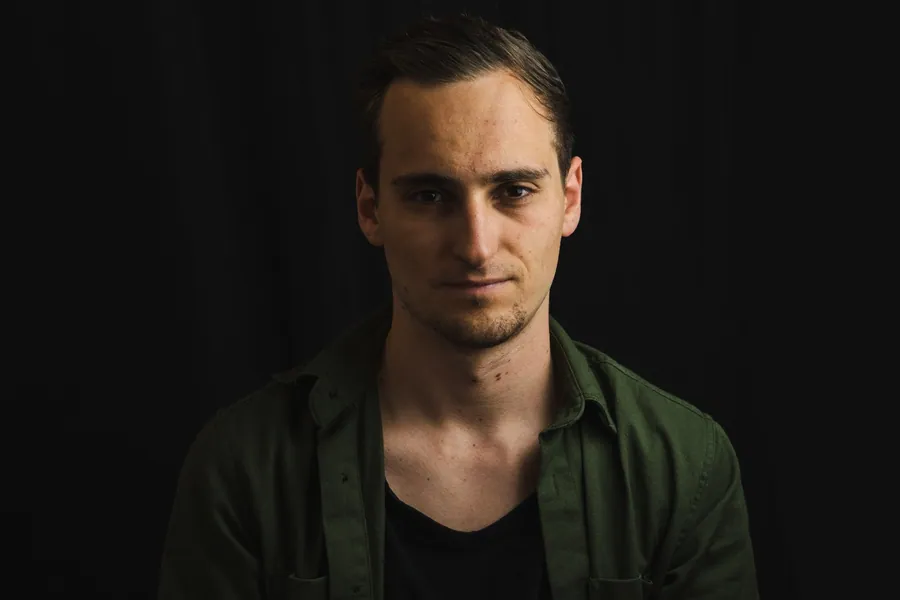
Small on purpose
A one-person studio has an obvious limit: there is one pair of hands. It also has an advantage that larger setups have to work hard to fake. The person who heard your brief is the person deciding what a door should sound like at two in the morning three weeks later.
So the projects I take are the ones I can do properly. If a schedule does not fit, I say so at the start rather than delivering late, and if something is outside what I do well, I say that too.
The room
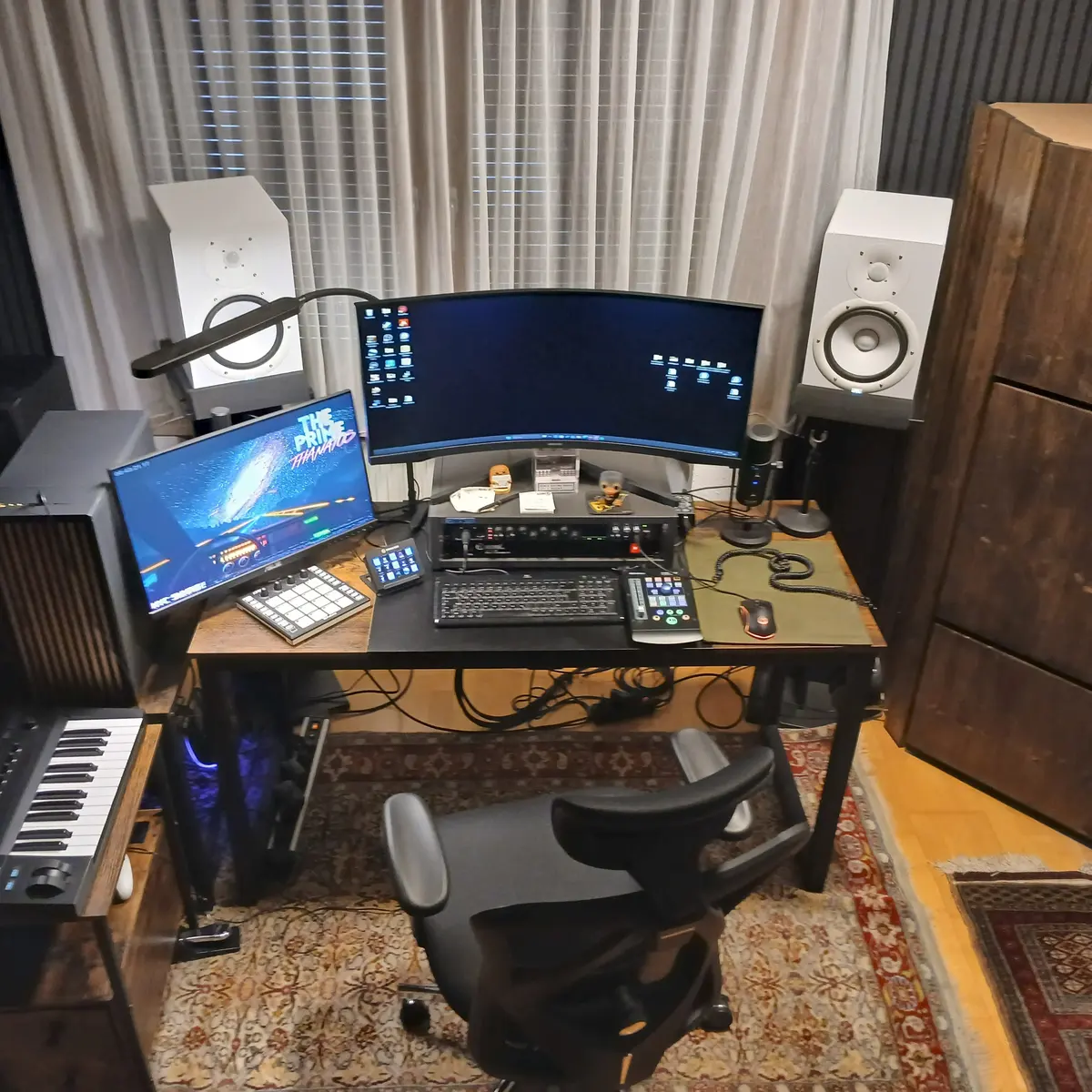
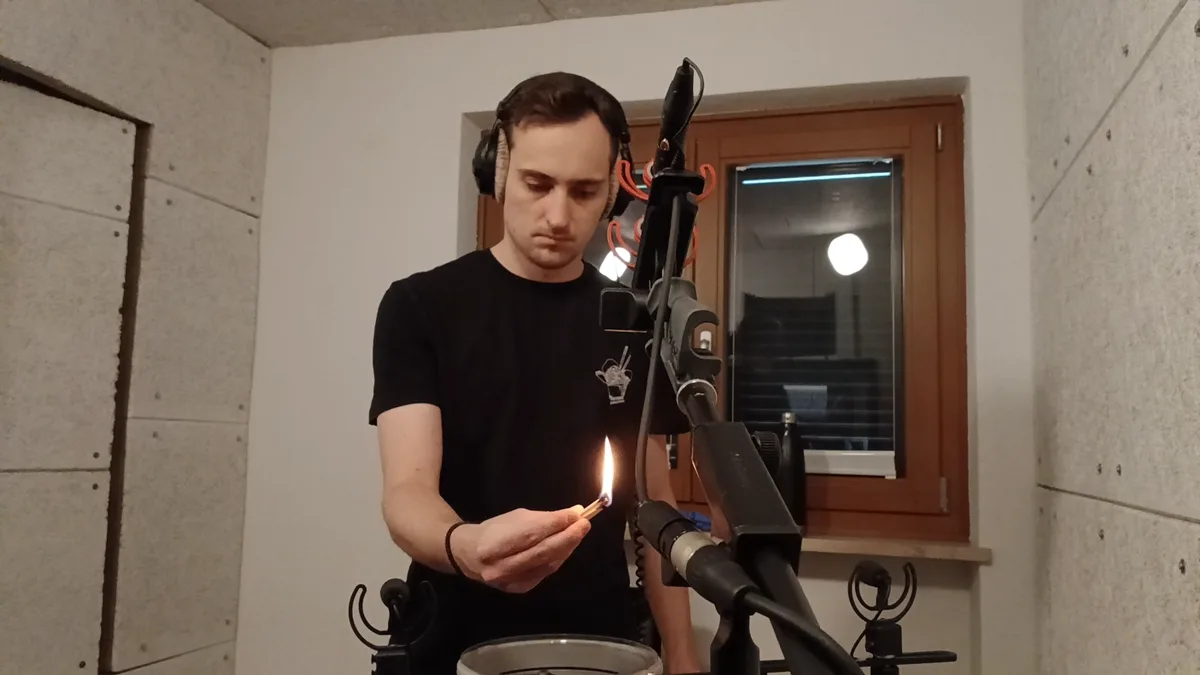
Recording, editing, composing and mixing all happen here, which is why there is foley material on the floor as often as there are instruments on the desk. Most of what a game needs already exists as a physical object somewhere. The work is finding it, recording it properly, and then making it sound like it belongs to your world rather than to the room it came from.
The room was built for this.
Over the winter of 2024 and 2025, an inner shell went up inside an ordinary room: a timber frame, stone wool in every bay, OSB on all four sides. The photographs below are that build, in order.
-
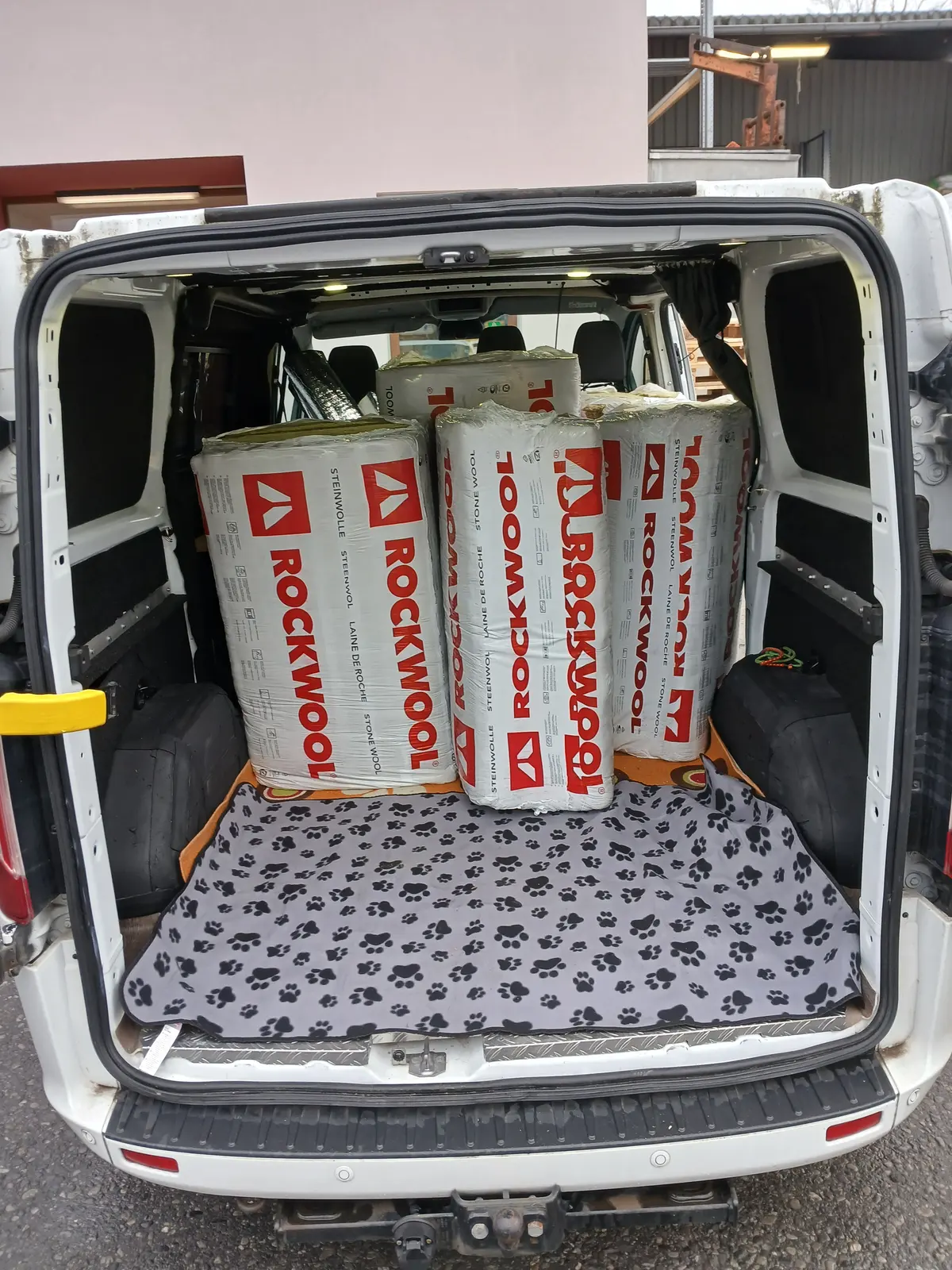
The insulation, on the way home -
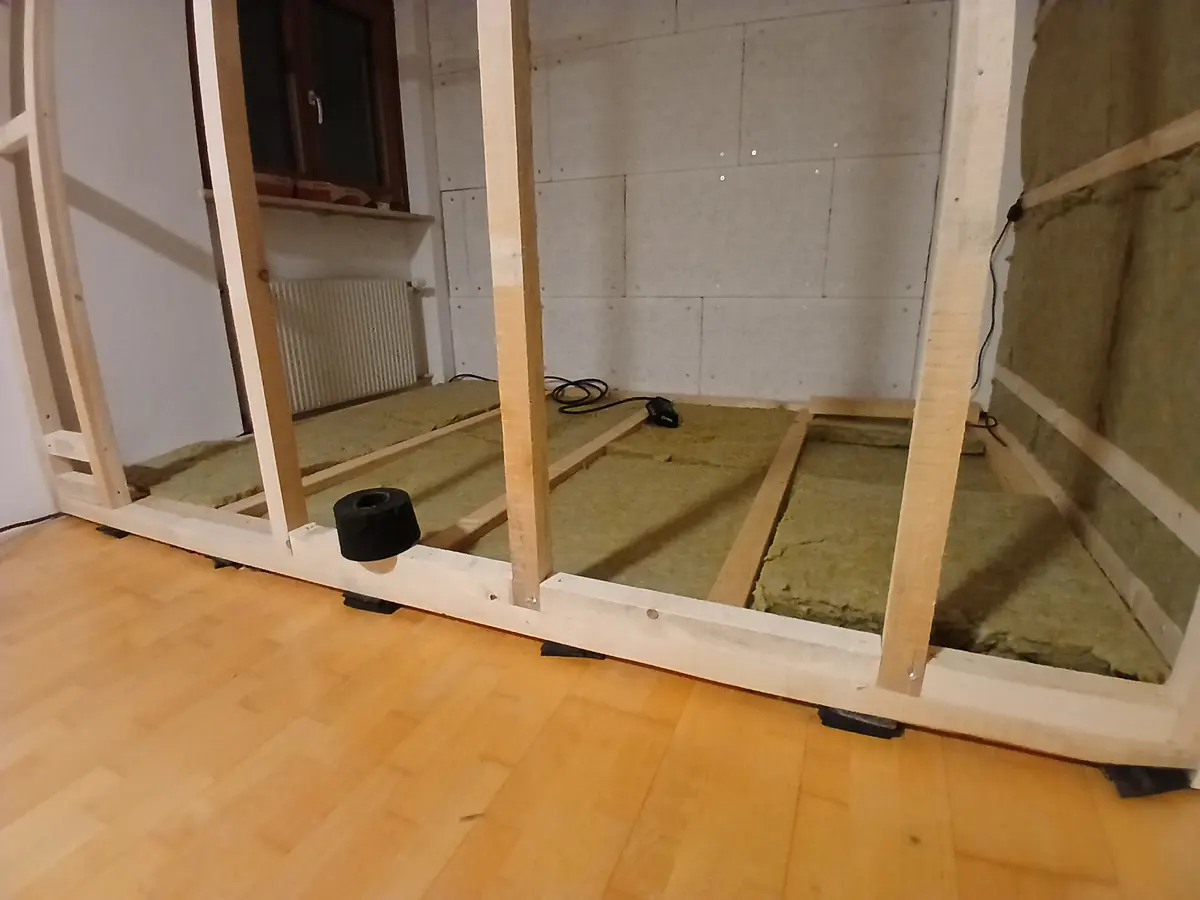
The frame standing, bays filled -
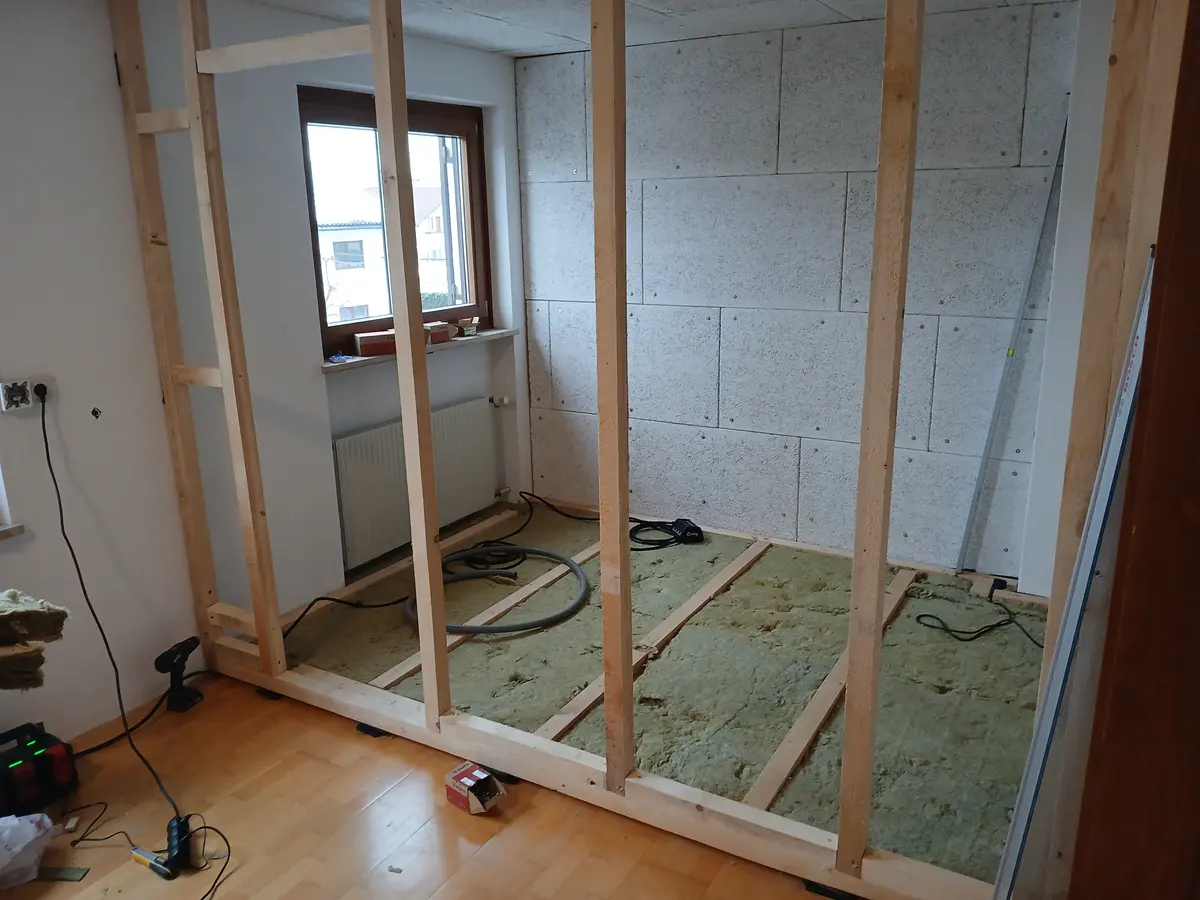
The first wall boarded, floor bays filled -
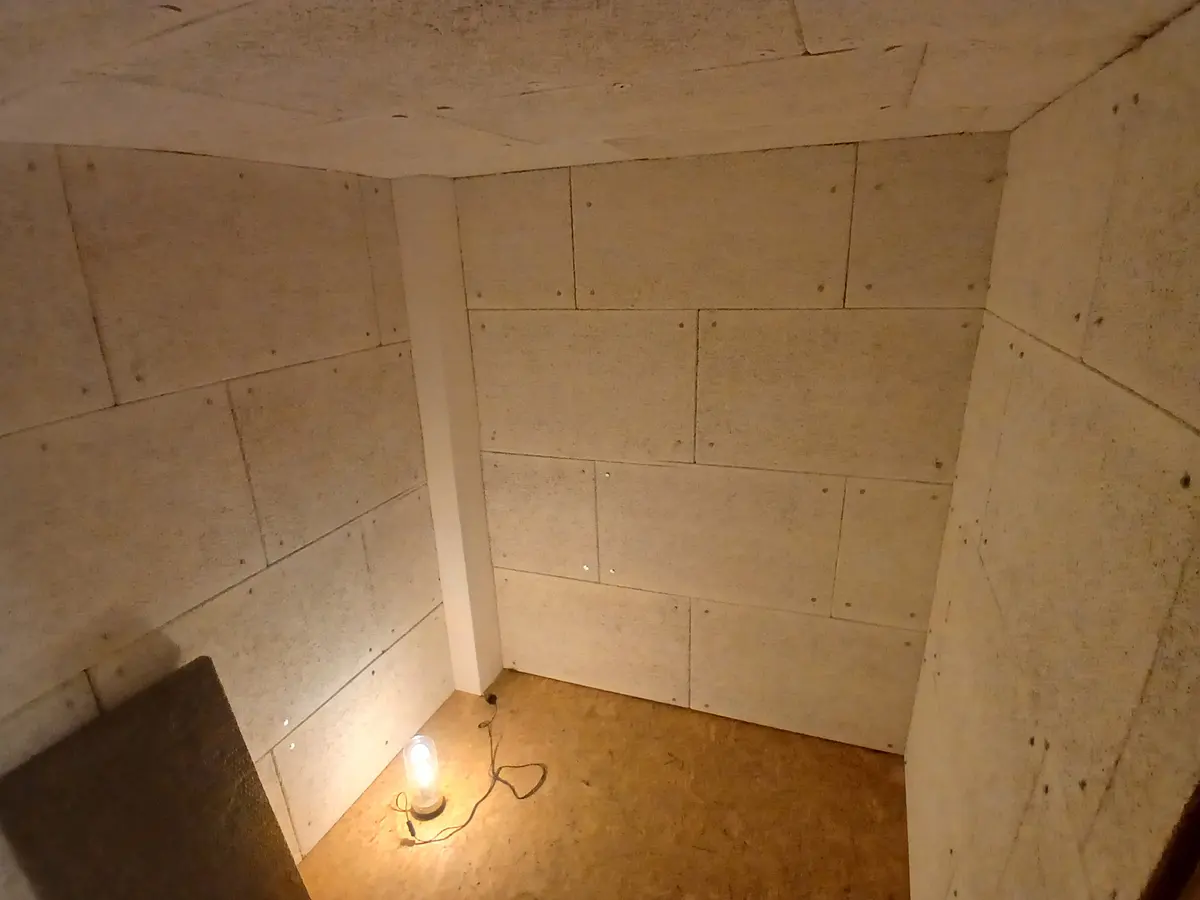
The shell closed, one work lamp
It matters for a practical reason. A library that promises real recordings has to be made somewhere quiet enough to get them, and quiet is something you build rather than something you buy. Everything on the libraries page was recorded in here afterwards.
Three things I will not compromise on.
Each one links to something on this site you can check rather than take on trust.
-
Recorded, not licensed
Field and foley material is captured for the project that needs it, at up to 192 kHz, so it survives being pitched, stretched and torn apart later. Where an outside library makes sense it is processed and layered, never dropped in raw.
Hear the field recordings -
Named so it can be found
Everything ships to the Universal Category System, with metadata written into the files. It arrives sorted, not as a folder someone else has to tidy.
The tool that does it -
Built for the hundredth repeat
Game audio is heard more often than any other kind. Music loops without a seam, and a sound effect comes with the variations that stop it wearing out.
A creature set of 56
How a project runs.
Five steps, in order. You approve the direction before anything gets produced, and you hear each batch as it lands rather than waiting for one big reveal.
-
Understand the game
I play your build or read what exists, and map what the game has to say with sound.
-
Define the sound direction
References, palette and priorities, agreed in writing before anything is produced.
-
Create
Recording, designing and composing in batches, so you hear real progress early.
-
Refine
You comment per batch, I sharpen. No single big reveal at the end.
-
Deliver
Production-ready audio files, named and organised for your pipeline.
What I do.
Ten things, each with an example on this site. Nothing here is a claim without something behind it.
Tell me what your players do most often.
That one sentence is usually enough to work out what your game actually needs from its audio. Two more and I can tell you whether I am the right person for it.